
Diamond Bar Wood Flooring helps homeowners replace carpet with hardwood in Diamond Bar, CA, and our crew brings more than 20 years of hardwood installation and refinishing to every conversion, serving surrounding cities including Walnut, Rowland Heights, South San Jose Hills, Pomona and Brea. Pulling carpet is the easy part. What makes the new floor last is what happens between the tack strip coming up and the first board going down.
The project fits Diamond Bar’s housing closely: 41.7 percent of the city’s housing units were built in the 1980s, a decade when wall-to-wall carpet in living rooms, bedrooms and on stairs was a standard finish. Some owners discover original hardwood underneath that can be refinished. Others find a plywood subfloor or concrete slab that is ready for a new floor once it is properly prepared.
Either way, the decision is easier with facts in hand. We lift a corner, look at what is below and tell you which path makes sense before any carpet leaves the house. From there we handle the whole process: removal, disposal, subfloor repair, moisture testing, installation or refinishing, stairs and transitions to the rooms that keep their existing flooring.
What Is Under the Carpet
Original Hardwood Worth Refinishing
Some carpeted houses were built with oak strip flooring that was covered later. When we find it, we look for the damage carpet leaves behind: rows of staple holes from the pad, nail holes and stains along the tack strip, and dark pet stains that soaked through. Many of those floors refinish beautifully, and refinishing costs far less than a new installation. If the wood is sound but a few boards are stained or damaged, we weave in matching boards before sanding so the whole floor finishes as one.
Plywood and OSB Subfloors
In many carpeted rooms of this era, the carpet sits directly on a plywood or OSB subfloor. That surface was never meant to be the finished floor, so it may have paint overspray, stains, uneven seams or loose panels. We clean, fasten and flatten it so new hardwood has a solid base.
Pet accidents and plant spills can soak through carpet and pad into the subfloor. We check those areas with a pin moisture meter and replace any section that has softened.
Concrete Slabs
Downstairs rooms may reveal a concrete slab under the carpet and pad. Slabs need moisture testing, often an in-situ relative humidity test following ASTM F2170, before glue-down or floating hardwood is installed. Cracks, high spots and old adhesive residue are addressed during preparation.
Removing Carpet and Preparing the Floor
Carpet, Pad and Tack Strip Removal
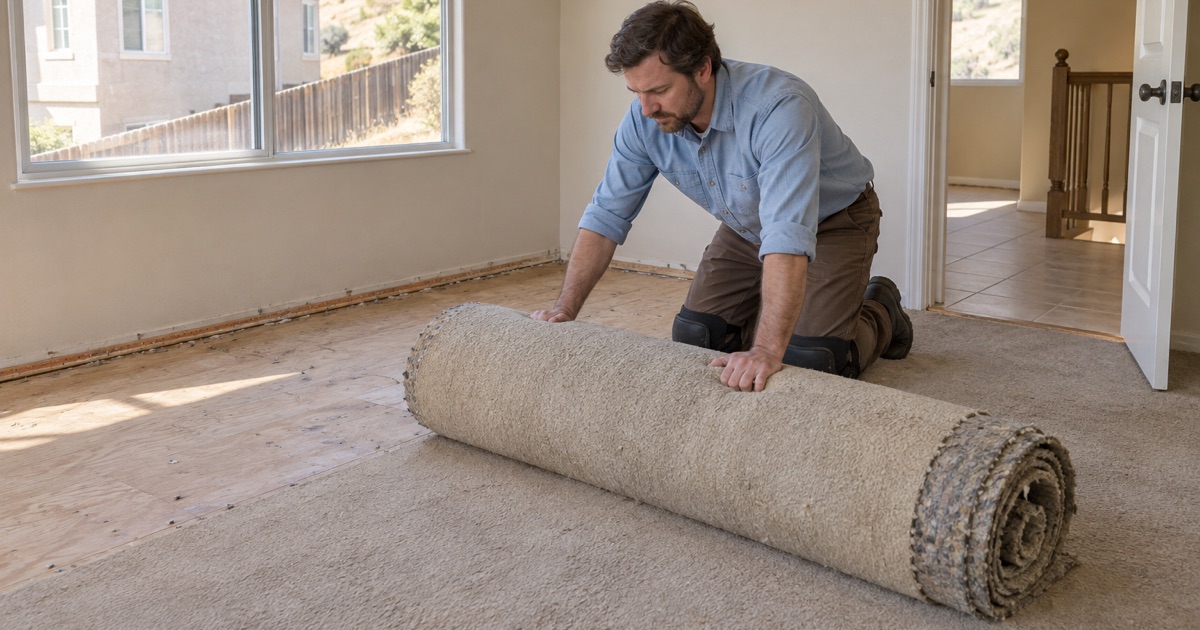
We cut carpet and pad into manageable rolls, pull every staple, and remove the tack strip nailed around the perimeter. Old staples left behind can telegraph through new flooring or catch on a sander. All debris is hauled away so the rooms are clear for the next step.
Testing Older Layers Beneath
Occasionally carpet was installed over older sheet vinyl or tile, particularly in kitchens, entries and family rooms. Those layers and their adhesives may need testing before removal. South Coast AQMD Rule 1403 requires a survey for asbestos before renovation that covers all layers of flooring materials down to the joist level, so we sample first and plan the next step around the results.
Subfloor Repair and Flattening
Carpet hides a lot, including squeaks and uneven spots. Once it is up, we screw subfloor panels to the floor joists to quiet squeaks, sand or plane down high seams and fill low areas. Sections softened by past leaks are cut out and replaced before any hardwood goes in.
Choosing and Installing the New Floor
Solid or Engineered Hardwood
Over a plywood subfloor, either solid or engineered hardwood can be nailed down. Over a concrete slab, engineered hardwood is usually glued down or floated. We recommend construction based on the subfloor, the room and whether you want the option to sand many times in the future. Engineered products sold in California must use composite cores that comply with CARB Phase 2 or TSCA Title VI formaldehyde standards, and we confirm labeling before ordering.
Species, Width and Finish
Red oak and white oak are both popular choices when replacing carpet. White oak in a wide plank or a natural matte finish creates a contemporary look, while red oak strip matches many existing floors elsewhere in a house. Site-finished floors use finishes that fit the South Coast AQMD Rule 1113 VOC limit for wood coatings.
Condo Approval and Sound Underlayment
Replacing carpet with a hard floor above another unit changes how noise travels. Many associations require approval and a sound-rated underlayment before the change, and the impact insulation class they require is set in their own rules. We gather product specifications and help you submit them before ordering.
Stairs and Transitions
Carpeted Stairs to Hardwood Treads
When the living areas go hardwood, a carpeted staircase often stands out. We convert carpeted stairs by removing the carpet, cutting back the old rounded nosing and installing new hardwood stair treads and risers matched to the floor. Stairs are priced per tread and riser so the cost is clear.
Transitions to Tile and Remaining Carpet
Where new hardwood meets bedroom carpet or kitchen tile, a reducer, T-molding or threshold bridges the height difference. We place transitions under closed doors where possible so they stay out of sight. Transitions are milled or stained to match the new hardwood, so the change from one floor to the next looks planned rather than patched.
Living in the Home During the Project
Most families stay home while carpet is replaced. We work room by room, keep a path through the house and use dust containment during any sanding. Each finished room comes with a written cure schedule so furniture and rugs return at the right time.
- 20+ Years of Wood Floor Work
- Free In-Home Estimates
- Dust-Contained Sanding